
13/10/2026
Limescale and your shower head: the guide to keeping your nozzles clean
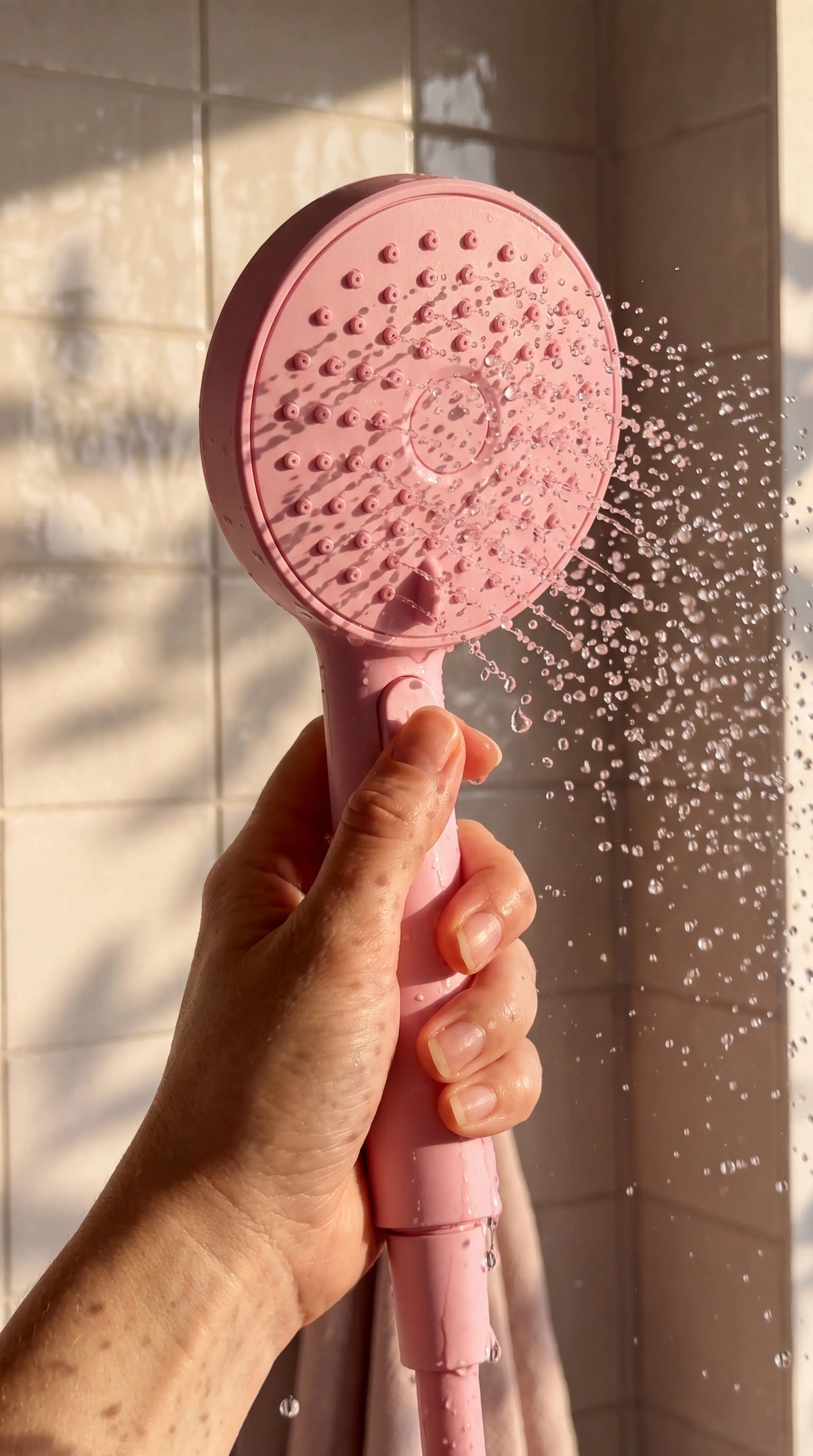
Jets spraying in every direction, a limp little trickle, tiny white dots all over the shower head: limescale has paid you a visit. In many parts of Europe the water is hard, and your shower head pays the price. The good news? With a little upkeep, you can keep your nozzles clean for a very long time. Here's how.
Where does limescale come from?
Tap water contains dissolved minerals, mostly calcium and magnesium. When the water dries or heats up, these minerals settle and form a hard white layer: limescale. The “harder” your water, the faster it builds up.
On a shower head, it loves to settle in the tiny holes of the nozzles. Little by little they clog up, and the spray gets patchy.
How do you know if your water is hard?
- White marks on your faucets and shower walls.
- A kettle that scales up fast.
- The water hardness information published for your area.
The power of silicone nozzles
On a lot of newer shower heads, the nozzles (the little nubs the water comes out of) are made of soft silicone. And that changes everything. Silicone is flexible: when limescale clings to it, just rub the nozzles with your fingertip to pop it off. The deposit comes away, no tools, no products.
The right rhythm: a quick swipe of your finger every now and then, say once a week during your shower. It takes a few seconds and saves you the big clean-ups.
The deep clean with white vinegar
Once limescale has moved in, white vinegar is your best friend. It dissolves limescale, it's cheap, and you probably already have some in a cupboard.
Method 1: shower head off
- Unscrew the shower head from the hose.
- Dunk it in a container filled with white vinegar, neat or slightly diluted with warm water.
- Let it soak for several hours, or even overnight if the buildup is thick.
- Rub the nozzles with your finger or a soft old toothbrush.
- Rinse with clean water, screw it back on, and run the water to flush out any last residue.
Method 2: the freezer bag
Don't feel like taking it apart? Fill a freezer bag with white vinegar, slip it over the shower head and secure it with a rubber band. Let it work, remove the bag, scrub, rinse. Simple and effective.
The alternative: citric acid
Citric acid comes as a powder. Dissolve it in hot water and use it just like vinegar. The upside: it doesn't smell like salad dressing.
What not to do
- Never mix vinegar and bleach. The mix gives off dangerous fumes.
- Avoid scouring pads and scrapers on a colored shower head: you could scratch the finish.
- Forget the needle for unclogging nozzles: you could damage the silicone or warp the holes.
- Don't soak a shower filter in vinegar: the cartridge isn't made for that.
A word on shower filters
You'll sometimes see filters marketed as “anti-limescale”. Let's be honest: a shower filter like ours reduces chlorine, not limescale. The minerals stay in the water. For limescale, there's no magic: upkeep is what makes the difference.
The ideal cleaning schedule
- After every shower: a quick squeegee on the walls, and let the shower head air-dry.
- Every week: a swipe of your finger over the silicone nozzles.
- Every month, or more often if your water is very hard: a white vinegar bath.
- Every now and then: check the hose and seals, and wipe the outside of the shower head with a soft cloth.
What about the hose?
Limescale can also build up in the hose nuts and around the seals. When you take the shower head off, run a vinegar-soaked cloth over the threads while you're at it. The seals will stay supple and you'll avoid small leaks.
At Showrz, the 3-spray shower head has silicone nozzles precisely so limescale comes off with a simple swipe of your finger. With its pause button and three spray modes (rain, massage, power jet), it's sold on its own or in the full kit. And since it comes in nine colors, you might as well keep it looking good for a long time.